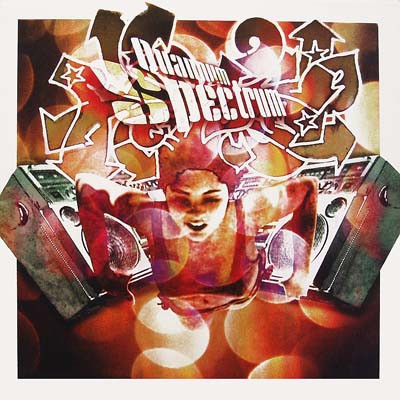
1. Latyrx- Storm Warning (prod. DJ Shadow) [1999] [Quannum Projects]
If any genre out there has to constantly deal with how its listeners perceive and interact with its culture and socio-cultural context, it's Hip Hop. I was reading through the liner notes for the compilation this song debuted on (Quannum Spectrum), and Lyrics Born (one half of both the Latyrx group and their namesake) explains his take on what was in the late 90's the growing divide between different rap audiences. For those without that context here's a top level summary:
Labels like Cash Money, No Limit, and Bad Boy had taken the post-Biggie/post-2Pac end of mainstream rap into an attitude of glitz and glamour supplemented with street rap machismo; Ruff Ryders & Roc-A-Fella flipped the split more in favor of street rap, but the flossin' was still there. Meanwhile the "underground"[a] had started crystallizing in records like Funcrusher Plus, Black Star's 1st album, DJ Shadow's Endtroducing, and the early work of MF DOOM... and somewhere in there was the (not-so) early work of Eminem[b]. You had people arguing mainstream rap had sold out on some materialistic stereotype shit, and you had people arguing underground rap didn't matter at all and that underground rappers were simply haters.
Neither take is accurate (surprise: nuance is a thing), and Lyrics Born knew that:
"Now don't get it twisted. This isn't a 'Sheeeit, that ain't real Hip-Hop, that shit ain't even [platinum],' or 'Dewd, that shit isn't real -- He did a song with Boys II Girls'[c] type piece. That argument's been sucked. Furthermore, that shit is irrelevant. If a record is good, it's good, whether it sells 1 copy or 1 million. Fuck the underground if [its] insecurity and self-image can't accept [its] members with some dough. Conversely, fuck the mainstream if their insecurity and self-image can't accept its members with some creativity."
Now where does Latyrx fit into this equation? Well they clearly have creative debts to backpacker-friendly groups like Freestyle Fellowship and De La Soul in how the flows and words slip-slide around, but I'd argue there's also a debt to the likes of E-40, arguably THE Bay Area gangsta, in those slippery flows too. Quannum is a collective that doesn't really get much love in rap conversations nowadays[d], and that's a shame because their shit felt more genuine and more genuinely-forward thinking compared to some of the backpack canon that still gets lauded nowadays.
DJ Shadow's beat for this song fascinates the hell out of me. It takes the sampledelic sound of Endtroducing and puts it into a purely rap context. Musical fragments build up and weave in and out of the track, but those shifts don't distract heavily from the rappers on the track. Plus those drums feel more mid 80's Larry Smith/Schoolly D (and the bay area raps indebted to that style of drum machine-heavy production) than the NY boom bap style of flipping drum breaks you hear in other backpack raps of the era. Plus I gotta give credit to Lyrics Born and Lateef (the other half of the group and its name) for taking the concept of an apocalyptic storm and writing a song around that doesn't get buried within its concept to the point of corniness[e][f].
2. BeatKing feat. Danny Brown- BDA Remix (prod. Stunt-N-Dozier) [2015] [C3 Entertainment]
I'd be lying if I said I wasn't still missing BeatKing (R.I.P.). Dude had a talent for splitting the difference between classic Memphis crunk, the DJ Screw-isms of Houston rap[g], the strip club as a cultural hub, and a sly sense of humor[h] that could sucker punch you outta nowhere. Yeah he'd gotten more formulaic in his beats and his raps the past few years, but some shit was still fun to listen to (e.g. "Outside" from 2024). Plus in my eyes BeatKing was a better rep for the heart of Texas rap than the piece of cardboard people call Travis Scott[i].
One song of his that took me a while to come around to liking but hadn't left my mind since I first heard back in 2015 is this song right here: the remix of BDA. Now the original BDA was built around a sample of the horn stabs from Fiend's No Limit-era classic "Mr. Whomp Whomp", which I thought was quaint but not particularly grabbing. This remix, though, is built around a sample of the opening to Juvenile's "Ha", another classic from New Orleans[j]. People have argued up and down whether samples of well-known songs belong in rap or not, despite plenty of rap songs before the 90's being built on samples/re-interpolations of popular songs. I'm of the opinion that if you can do something interesting with it then sample what you want.
Where the original "BDA" kinda fails at that, the remix succeeds. The beat for "Ha", courtesy of Mannie Fresh, starts with a synth[k] melody and some stuttering claps before weaving the bassline and more percussion into the mix with more synths added on top for the rest of the track. "BDA Remix" takes that 5 second beginning and loops it before adding in its own percussion and bassline, the synth melody in the sample being brought up and down a step in pitch throughout the track. It's a simple structure for the song, but it works; the sample gets its own context outside of the source material with what changes there are, which is what you should do with a sample in my opinion.
I think my original aversion to this track was the presence of Danny Brown. This was around the time after his album "Old" where his features on other people's tracks were getting kind of annoying (e.g. "High" by Freddie Gibbs, "Ego Death" by Busdriver, "Rambunctious" by BeatKing, etc.) because of his using the same voice on all of these tracks[l]. When I decided to revisit this song randomly, I found myself not minding Brown's voice at all. His howling yelp of a voice works well alongside BeatKing's bassier voice as they both riff off the lyrical premise of "Ha" before just doing their own strip club riffs. Yeah it's not a particularly "lyrical"[m] track, but sometimes a strip club song can just be a strip club song; not every rap song needs to have raps intricate to give Kool G Rap a run for his money.
3. David Kauffman & Eric Caboor- Midnight Willie (composed by Caboor-Kauffman) [1984] [Donkey Soul Music]
Something about music listening that fascinates me is how we use music to process through our own emotions. Namely it fascinates me what music we use to console ourselves in moments of despair. I haven't the foggiest idea when exactly listening to popular music became a coping mechanism[n], but I do know it never stopped being a coping mechanism. Pop culture consciousness has, in more recent times, molded a general idea of music for the young and angsty being genres like goth rock, emo[o], and grunge (among other genres born from the ashes of punk rock's first wave).
In my teen years I definitely had a phase where grunge was my sad time music (records like Alice in Chains' "Dirt" and Soundgarden's "Superunknown"), but folk music also filled that role. Nick Drake's albums "Bryter Layter" and "Pink Moon" offered a myriad of songs I used to decompress from intense feelings of sadness back then, and that emotional connection is primarily why I value those records so much[p]. My love for those records would lead me to names like Cat Power, Elliott Smith[q], Red House Painters, and Jeff Buckley.
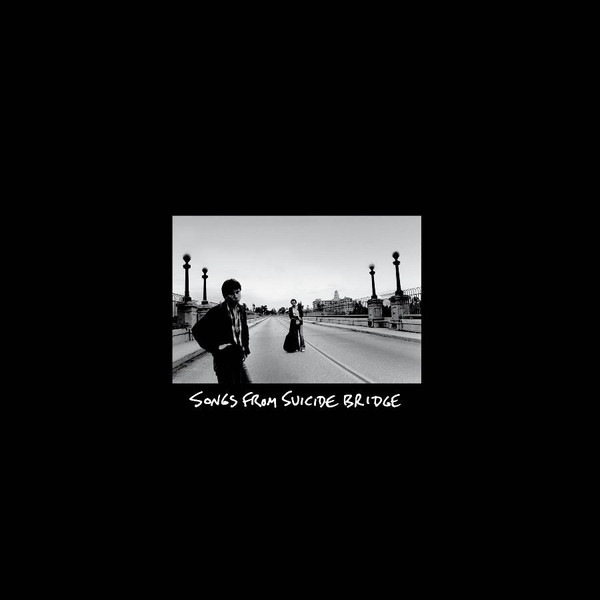
The record this song comes from, "Songs from Suicide Bridge", occupies a nebulous space between the folk melancholia of Nick Drake and the post-alternative melancholia of the latter artists. While the airy jangle of the guitar on this song betrays its origins in the 1980's and the section where its titular character Willie plays a song riffs off the sixties' take on delta blues, the main composition sounds like it could've come out any time between 1968 and 1998. Hell, it sounds like it could've come out in the 2000's or 2010's too. The quasi-timelessness of its sound, to me, isn't the main sell, though.
One of the stranger aspects of my listening habits is that my melancholy music often times includes songs that, to the average listener, don't track as overt in their blues (the hue, not the genre) as is expected[r]. Sonically this track reads as melancholic enough for a casual listener to pick up on, but the subject matter doesn't particularly read as "this is a song about being sad" like most music people use to process melancholy does. Its story of a homeless man horribly injured by a train accident while hitching it cross-country playing guitar for chump change before dying alone in the woods is obvious in its tragedy, but it's a 3rd person tragedy and those kinds of narratives don't typically make the sadgirl playlists.
So what is it that allows me to wallow inside a song like this? I can't give any reason more substantive than "I just vibe with it." I guess in how it sounds I find some raw emotional vibration that my brain picks up on and resonates with. I can empathize with Willie's plight, of course, but again that's a 3rd person thing. I hear my own despair not in the story but in the timbre and melody, because for me that is where the emotional connection to a song starts.
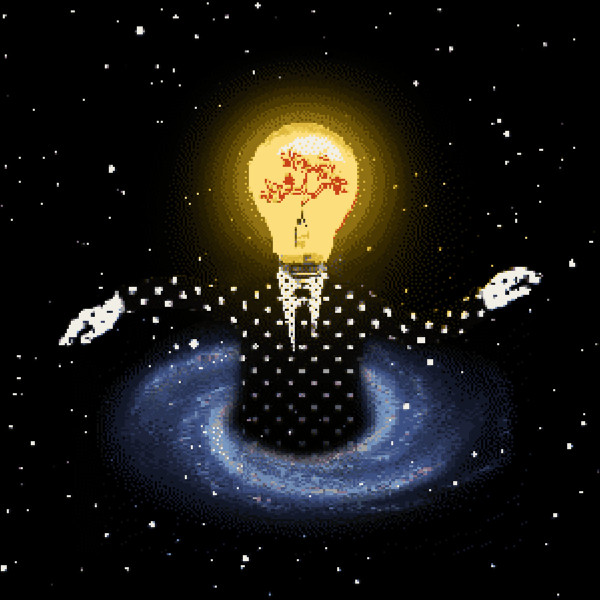
Angine de Poitrine- Fabienk (composed by Marc-Antoine Mackin-Guay and Charles Thibeault) [2026] [Self-Released]
For a good while I was under the impression that rock music had run its course creatively. That's not to say that I thought there weren't "new" things that could be done with rock, though[s]. It just seemed like there weren't really any bands doing something different to expand the language of rock (or at least not any bands that managed to make themselves heard across the static of the internet). After listening to Geese's album "Getting Killed" and Viagra Boys' album "Viagr Aboys" when they both came out last year, I was delighted to admit I had been proven wrong; those two records do feel like bands twisting the genre into shapes noticeably different from what had come before.
This random discovery of a song I found fits that mold as well. I've seen this group tagged as math rock, progressive rock and psychedelic rock, but I don't know that any of those labels really fit this song here. Prog and psych rock tend to be thrown on as labels for any rock music that sounds a little "odd" even when the actual methodologies of either genre aren't actually practiced by the musicians in question. Khn de Poitrine's microtonal guitar playing, at a distance, kinda resembles Ian Williams' work in Battles and Don Caballero[t], but that similarity's in the timbre and not the technique.
That Ian Williams comparison is the only connection to math rock here. You won't find the shifting time signatures and tempos used to create rhythmic variance that math rock loves in this song. The groove is placed first and foremost in the track; the polyrhythms exist to serve the groove.
To be honest the individual pieces of the composition don't allow for any easy comparison. Dance-punk? No because the sense of melody isn't punky in any way. Math rock? Again, the hawkeyed focus on groove negates that comparison. Even comparison to individual acts like Battles, Ruins et al fall apart under scrutiny. The one comparison that makes sense to me (and this is why I used the term "groove") is Garry Shider and Michael Hampton's work with Funkadelic, but that feels more like a similar guiding spirit than a shared musical philosophy[u]; this ain't "One Nation Under a Groove."
There in lies the beauty of this song's existence. Here we have a rock song made and released in the year 2026 that brings to mind acts as disparate as Funkadelic and Battles yet sounds dissimilar enough from anything you can think of to stand as its own thing. Chalk another victory up for random discoveries.
a. Read as: the post-Native Tongues/Wu-Tang (and sometimes post-Project Blowed) contingent of underground rap acts thrown under the "backpacker" umbrella (whether fairly or unfairly I'll let you decide). The street rap end of the underground (e.g. Sic Wid It, Screwed Up Click, Suave House, Thizz Entertainment, etc.) tends to get (genuinely unfairly) brushed aside in a lot of rap history analyses; probably because a lot of people who yap about rap don't have a clean-cut narrative or cultural context of their own attached to any of that stuff.
b. Before Dr. Dre found his next posterboy, Em was slumming it up in the backpacker end of the rap cypher scene that birthed guys like Mos Def, Talib Kweli and Canibus. Oh, how times change. Also his earliest recorded work dates back to the early 90's when he was rapping like Kid N Play, but "Infinite" from '96 is his debut proper.
c. Even though this is just a playful joke about R&B groups/singers and how they were seen as less than masculine compared to rappers (y'all remember Sisqo?), I'm not gonna lie: I'd listen to an R&B group made up entirely of trans women.
d. The Bay Area's rap scene, on a whole, tends to get overlooked despite how many classics it's given us and how much it's influenced so much of rap's sound and culture. Guess that expands even to the "real hip-hop" side of things too.
e. Remember when Lupe Fiasco rapped from the perspective of a cheeseburger? Let's also not forget about when Erick Sermon rapped from the perspective of Parrish Smith's penis on the 3rd EPMD album.
f. While Freestyle Fellowship is still fresh on the mind, "Storm Warning" reminds me a bit of "Seventh Seal", Mikah 9's solo cut from the Fellowship's first album. That song is more explicitly about the biblical apocalypse with ideas of man's origin being extraterrestrial weaved in, but the vibes line up and I can picture that song having had an impact of Lyrics Born & Lateef when they were coming up.
g. Also its Michael Watts-isms [R.I.P.] since BeatKing repped hard for Swishahouse and collaborated with some of its alumni like Slim Thug, Chamillionaire, Paul Wall and Lil' Keke (also a Screwed Up Click alumnus).
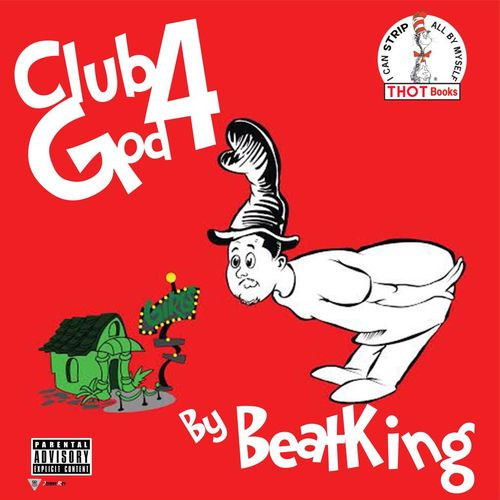
h. Note the Dr. Seuss book spoof of an album cover "Club God 4" has.
i. Fun fact: Travis Scott wasn't the first dude to make a rap record called "Astro World." BeatKing had a mixtape back in 2013 called "Astroworld", named after the famous Six Flags amusement park in Houston like Travis' record. Said mixtape had a photo of BeatKing's park pass from when he was a kid as the cover. When Paul Wall wanted to do the same thing for the cover of one of his tapes, he personally reached out to BeatKing to ask if he could borrow the idea. Now technically Paul Wall could've done whatever he wanted; legally BeatKing owned nothing about Astroworld, its name, its park passes or any of its promotional material. He still asked out of respect, though, because that's what a real one does. I would be amazed if Travis Scott even knew that BeatKing tape existed.
j. Perhaps even THE classic New Orleans rap song... next to "Back Dat Azz Up", that is. I like "Ha" more, but I'm not deluded enough to think it outclasses "Back Dat Azz Up" in terms of impact and influence.
k. Your guess is as good as mine as to what kind of instrument this synth patch is supposed to replicate, if any.
l. It also didn't help that my opinion on Old itself had soured in the year and a half after its original release. As intriguing as the two sides of a record/personality concept is on paper, in execution you get a record that just sounds like two different EP's put together.
m. "Lyrical" sits inside a pair of quotation marks here because in rap it mostly exists as a connotation of super technical rap abilities as opposed to its original musical definition of expressiveness; in rap's case that would translate more to "how" someone raps, which has been the greater focus for a large number of rappers in the post-Autotune world.
n. Depressive music has existed for a long time, but I pinpoint this particular phenomenon to have most likely started post-Summer of Love, when the Vietnam War was broiling on with no end in sight, the optimism of the hippie era was withering away, and folk music was turning its sights from the outside world to the inner being (c.f. Joni Mitchell's "Blue"). Also metal was taking its first steps into proper existence (c.f. Black Sabbath's self-titled debut).
o. Being a child of the original Web 2.0 era, I can testify to emo music being dogged on online a lot for being music for mopey, angsty teens whose main crime was expressing their melancholy out loud and being melodramatic... things that teenagers have been doing for fucking ages... and the insults came from other teenagers and young adults who probably should've been smart enough to figure out being an adult making fun of kids is not a good look. Plus "emo" wasn't even treated like a musical genre so much as it was an umbrella term for melancholic and melodramatic music preferred by teens (e.g. My Chemical Romance and Linkin Park got dogged on for being "emo" back then even though MCR were already becoming more an alt-rock flavored stadium rock band than an emo band by the mid 2000's and Linkin Park were still a nu-metal band at the time).
p. They're both also just fantastic folk records. It's amazing how gorgeous both records sound while having such different styles to them (Bryter Layter's layered instrumentation versus Pink Moon's barebones acoustic guitar).
q. I know Elliott Smith said he didn't really take any influence from Nick Drake and vibed more with The Beatles and Bob Dylan, but that comparison to Nick Drake was the context I was given when I first learned about Elliott Smith.
r. I remember sharing in a forum how Flying Lotus' song track "Zodiac Shit" was a song that I listened to a lot in my down moments. Someone responded, "woah this makes me feel like I'm really high but I don't see how it sounds sad." I didn't reply because I didn't have the words to explain how it sounded to me.
s. There are so many untapped rhythmic and textural directions rock music could go in if there were more musicians looking to the last decade and a half of left-field club music (e.g. footwork, kuduro, gqom, singeli, etc.) for inspiration. Granted some of these sub/microgenres come from specific cultural contexts native to their place of origins (namely the African subgenres among what I listed), and the line between respectful inspiration and cultural plundering makes for a dangerous tightrope to walk. It can still be done, though.
t. I had to parse through a few different albums from both groups just to make sure I wasn't glazing this track super hard. In doing so I've come to appreciate how much of an afrobeat/high life influence there's been on Williams' guitar playing style over the years (an influence he himself noted was starting to take place when Don Caballero were still around).
u. Maybe you could stretch it to be something like "what if Trans Am tried to sound like Funkadelic instead of late 70's/early 80's FM radio?" Are Trans Am even still talked about as a band? Have they fallen into the indie rock ether like so many other bands of the 90's?
arrow_upward